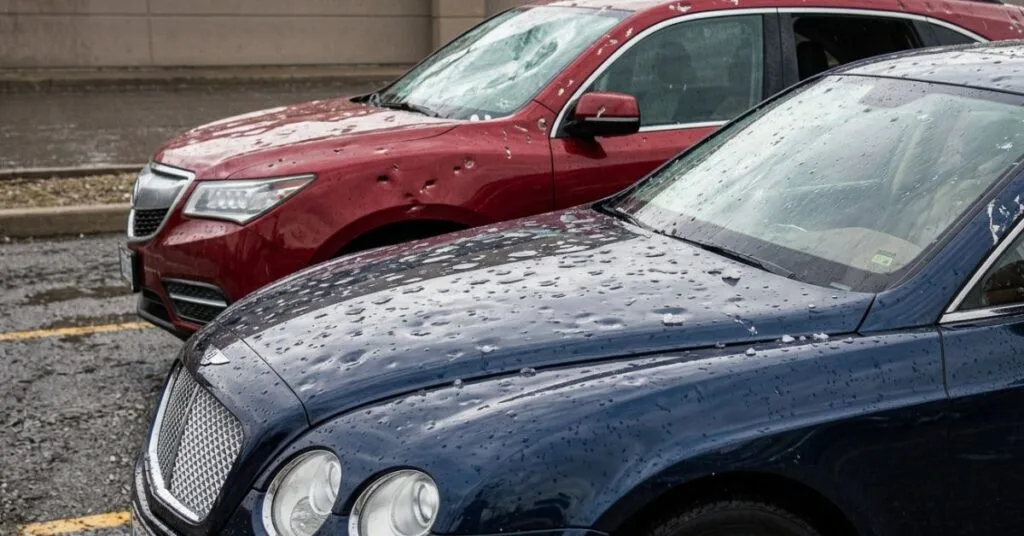
Philadelphia weather has a way of turning on you. One minute it’s a muggy summer afternoon, and the next, marble-sized ice is drumming against your windshield and hood. By the time the storm passes, your car can look like it went a few rounds in a batting cage dozens of small dents scattered across the roof, hood, and trunk. If that sounds familiar, you’re not alone, and the good news is that most hail damage is very repairable.
At Nigro’s Auto Body Repair, we see a wave of hail-battered vehicles every storm season. This guide walks you through what hail actually does to your car, how repairs work, what to expect from insurance, and why acting sooner rather than later protects both your vehicle and your wallet.
How Hail Actually Damages a Car
Hailstones don’t have to be large to cause real damage. Even pea- to nickel-sized hail, driven by wind and falling at high speed, can leave a car covered in shallow dents. Larger stones quarter-sized and up can crack windshields, dent deeper, and even chip or crack your paint.
The most common areas to check after a storm are the horizontal surfaces that take the brunt of a falling impact: the roof, hood, and trunk lid. But don’t stop there. Hail driven sideways by wind can also dimple door panels, fenders, and side mirrors, and it can crack windshields, sunroofs, and side glass.
There are two broad categories of hail damage, and the difference matters for how it gets fixed:
- Dents with intact paint. The metal is dimpled, but the paint’s surface isn’t broken. This is the most common outcome and the easiest to repair.
- Dents with paint damage. The impact chipped, cracked, or scratched the paint, exposing bare metal underneath. Left untreated, these spots can rust over time, which is why paint-broken dents need conventional repair rather than a simple pop-out.
Paintless Dent Repair vs. Conventional Repair
The single biggest question most car owners have is whether their hail damage requires a full repaint. In many cases, it doesn’t.
Paintless dent repair (PDR) is the preferred method for hail damage whenever the paint is still intact. A trained technician works the metal from behind the panel using specialized tools, gently massaging each dent back to its original shape. Because PDR doesn’t involve sanding, filler, or repainting, it’s faster, less expensive, and importantly. It preserves your car’s original factory finish. Keeping that original paint helps protect your vehicle’s resale value.
Conventional body repair comes into play when the paint is broken, the dent is too deep or sharply creased for PDR, or the damage sits on a panel edge or reinforced area where PDR tools can’t reach. This process may involve filling, sanding, priming, and refinishing the affected area to match your existing color. It takes longer than PDR but is the right call when the situation demands it.
A quality shop will assess each dent individually and often use a combination of both methods on the same vehicle. During your inspection, we’ll walk you through exactly which panels can be handled with PDR, and which need conventional work, so there are no surprises. You can learn more about our full range of hail damage repair services and how we match the method of the damage.
What to Do Right After a Hailstorm
The steps you take in the first day or two can make the repair process much smoother.
Start by documenting the damage. Take clear, well-lit photos of every affected panel — the roof and hood are easy to forget because you can’t see them at eye level, so grab a step stool or shoot from a higher angle. Note the date of the storm; insurers often cross-reference local weather records.
Next, check for any damage that affects safe driving, such as a cracked windshield, broken side mirror, or shattered sunroof. These may need attention right away, while cosmetic dents can wait for a proper appointment.
Then, get a professional assessment. Hail damage is notoriously hard to fully count on your own — dents that are invisible in shade become obvious under the right light. A body shop inspection gives you an accurate picture of the total damage, which is exactly what you’ll want before filing an insurance claim.
Finally, resist the urge to try DIY fixes like heat guns, dry ice, or suction cups you’ve seen online. These rarely work on the shallow, clustered dents hail produces, and they can crack paint or stretch metal in ways that turn an easy PDR job into a conventional repaint.
Hail Damage and Your Insurance
Here’s a point that surprises a lot of drivers: hail damage is typically covered under the comprehensive portion of your auto insurance, not collision. Comprehensive covers weather and other “acts of nature,” and filing a comprehensive claim generally does not raise your rates the way an at-fault collision claim can. (Always confirm the specifics with your own insurer, since policies vary.)
A few things worth knowing before you file:
- Your deductible applies. If the repair estimate is close to or below your comprehensive deductible, it may not be worth filing a claim. A shop can give you an estimate first so you can make an informed decision.
- You choose the shop. In Pennsylvania, you have the right to select where your car is repaired — your insurer can recommend a shop, but the choice is yours.
- Estimates and supplements. Hail damage totals can climb once a panel is inspected up close. A reputable shop documents everything and works directly with your insurer on any supplements, so the approved amount reflects the real repair.
At Nigro’s, we’re happy to provide a detailed estimate and coordinate with your insurance company throughout the process, which takes a lot of the paperwork stress off your plate.
Why Timing Matters
It’s tempting to shrug off hail dents as “just cosmetic” and put off repairs especially if your car still drives fine. But waiting has real costs.
Any dent where the paint is chipped or cracked exposes bare metal, and in Philadelphia’s humid, road salt-heavy climate, that bare metal can begin to rust within weeks. Rust spreads, and once it takes hold, a simple repair becomes a much bigger (and pricier) job.
There’s also a resale angle. Hail dents are one of the first things a buyer or dealer notices, and untouched damage can significantly lower a trade-in offer. Repairing promptly — ideally with PDR that keeps your original paint protects that value.
Finally, storm seasons cluster. If a big hailstorm rolls through the region, body shops fill up fast. Scheduling your assessment early means you’re at the front of the line rather than waiting weeks during the rush.
Get Your Hail Damage Assessed at Nigro’s Auto Body Repair
If a storm has left your car dimpled and dinged, don’t wait for rust or a rush to make things harder. The team at Nigro’s Auto Body Repair will inspect your vehicle, explain your repair options in plain language, and work with your insurer to get you back on the road with your car looking like itself again.
Contact us today to schedule your hail damage inspection and if storm season is on the horizon, get on our calendar early so you’re covered when the weather isn’t.
Frequently Asked Questions
It depends on the severity. Light to moderate hail damage handled with paintless dent repair can often be completed in a few days, while extensive damage or conventional repairs that require refinishing take longer. We’ll give you a realistic timeline after inspecting your vehicle.
In most cases, yes. Paintless dent repair restores the metal to its original shape without touching your factory paint, so properly repaired panels are essentially indistinguishable from undamaged ones.
Usually, yes especially if any paint is broken. Beyond appearance, prompt repair prevents rust and protects your resale value. If the damage is purely cosmetic and very minor, we’ll give you an honest assessment so you can decide.
No. You have the right to choose your own repair shop. We work with all major insurance companies and can handle the coordination for you.