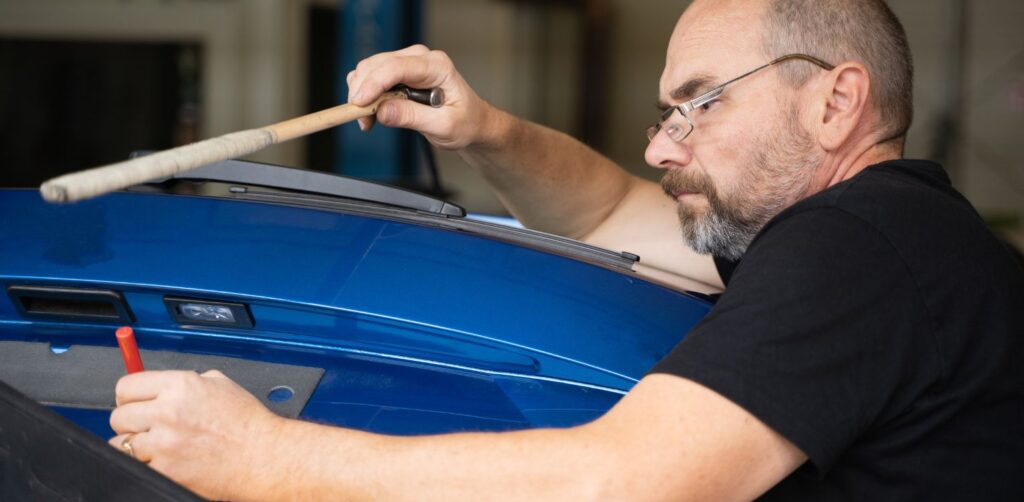
A dent in your vehicle can be frustrating, especially when you’re not sure whether it needs a simple repair or more extensive bodywork.
One of the first questions most vehicle owners ask is: How much will dent repair cost?
The answer depends on the size, depth, location, and type of dent, as well as the vehicle’s material and whether the paint has been damaged.
Two common approaches are paintless dent repair (PDR) and traditional dent repair. PDR can sometimes restore a panel without repainting, while traditional repair may involve filling, sanding, refinishing, or even replacing a damaged panel.
For Philadelphia drivers, understanding the difference between these approaches can help you know what questions to ask before approving repairs.
What Determines Dent Repair Cost?
There is no single price for every dent.
A small door ding is very different from a deep crease caused by a collision. The repair method and final cost can change accordingly.
Important factors include:
- Size of the dent
- Depth of the damage
- Location of the dent
- Number of dents
- Condition of the paint
- Type of vehicle material
- Accessibility behind the panel
- Whether the panel is stretched or damaged
- Labor required
- Additional collision damage
A professional inspection is the best way to determine which repair method makes sense for your specific vehicle.
What Is Paintless Dent Repair?
Paintless dent repair, commonly called PDR, is a technique used to restore certain dents without repainting the damaged panel.
Instead of filling and painting the surface, a trained technician carefully works from behind or through appropriate access points to reshape the panel.
The goal is to restore the panel’s original shape while preserving the existing factory finish.
PDR may be appropriate for certain:
- Small dents
- Door dings
- Hail dents
- Shallow dents
- Minor parking-lot damage
However, not every dent qualifies for paintless dent repair.
When Does Paintless Dent Repair Work Best?
PDR tends to work best when the paint is still intact and the metal or panel hasn’t been excessively stretched or damaged.
The location of the dent also matters.
A technician may need access behind the panel to manipulate the damaged area. If the back of the panel is inaccessible, another repair method may be necessary.
The exact condition of the vehicle should be evaluated before deciding whether PDR is appropriate.
When PDR May Not Be the Right Option
Paintless dent repair isn’t a universal solution.
Traditional repair may be more appropriate when:
- Paint is cracked or missing
- The panel has a deep crease
- The metal is severely stretched
- The panel has sharp damage
- There is significant collision damage
- The panel is badly deformed
- The damage affects important edges or body lines
In some cases, the damaged panel may need to be repaired and refinished. In more severe situations, replacement may be considered.
What Is Traditional Dent Repair?
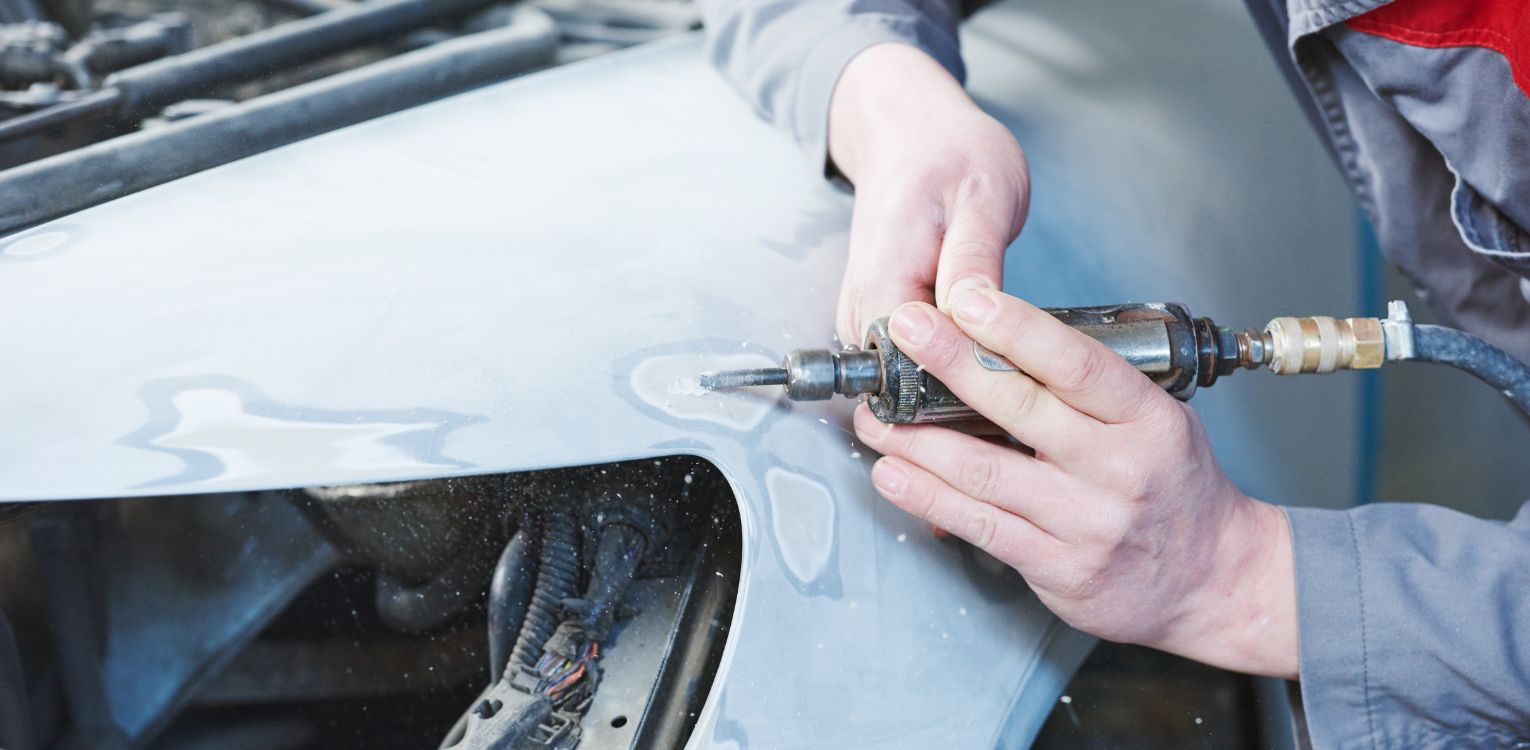
Traditional dent repair generally involves repairing the damaged panel and restoring its surface before refinishing it.
Depending on the damage, the process may involve:
- Removing damaged components if necessary
- Straightening the panel
- Repairing imperfections
- Preparing the surface
- Applying appropriate materials
- Sanding and smoothing
- Priming
- Painting
- Applying clear coat
- Finishing and inspecting the repair
This process can require more steps than PDR, but it is appropriate for many types of damage that cannot be addressed through paintless techniques.
Paintless vs. Traditional Dent Repair
The best method depends on the damage rather than simply which option appears cheaper.
| Factor | Paintless Dent Repair | Traditional Dent Repair |
| Paint damage | Best when paint is intact | Can address damaged paint |
| Small dents | Often suitable | Also possible |
| Deep damage | May not be suitable | Often more appropriate |
| Repainting | Usually not required | Often required |
| Panel access | Important | Generally less dependent on rear access |
| Major deformation | Usually unsuitable | May be appropriate |
| Repair time | Can be shorter for suitable dents | May require more steps |
The right approach is the one that properly restores the damaged area.
How Paint Damage Changes the Repair
One of the biggest differences between PDR and traditional repair is the condition of the paint.
If the dent has no significant paint damage, PDR may be an option.
But if the impact has cracked, chipped, or removed paint, simply reshaping the panel may not restore the vehicle’s appearance.
Traditional body repair can address both the panel and the damaged finish.
This is one reason a technician needs to examine the dent rather than choosing a repair method based only on photographs.
Does the Location of a Dent Matter?
Yes.
A dent in the middle of a large, accessible door panel may be easier to approach than a dent located directly on a sharp body line.
Other difficult areas can include:
- Panel edges
- Near structural reinforcements
- Around handles
- Near braces
- Areas with limited access
- Complex body contours
The location can influence both the repair method and the amount of labor required.
What About Hail Damage?
Hail can create numerous small dents across a vehicle.
When the paint remains intact, paintless dent repair may sometimes be an appropriate option.
However, the number, size, location, and severity of dents all affect the repair.
Philadelphia weather can produce conditions that leave vehicles with scattered dents, so a professional inspection is useful before deciding how the damage should be addressed.
If hail has caused significant vehicle damage, a broader inspection may also be necessary to identify other affected areas.
What If the Dent Happened in a Collision?
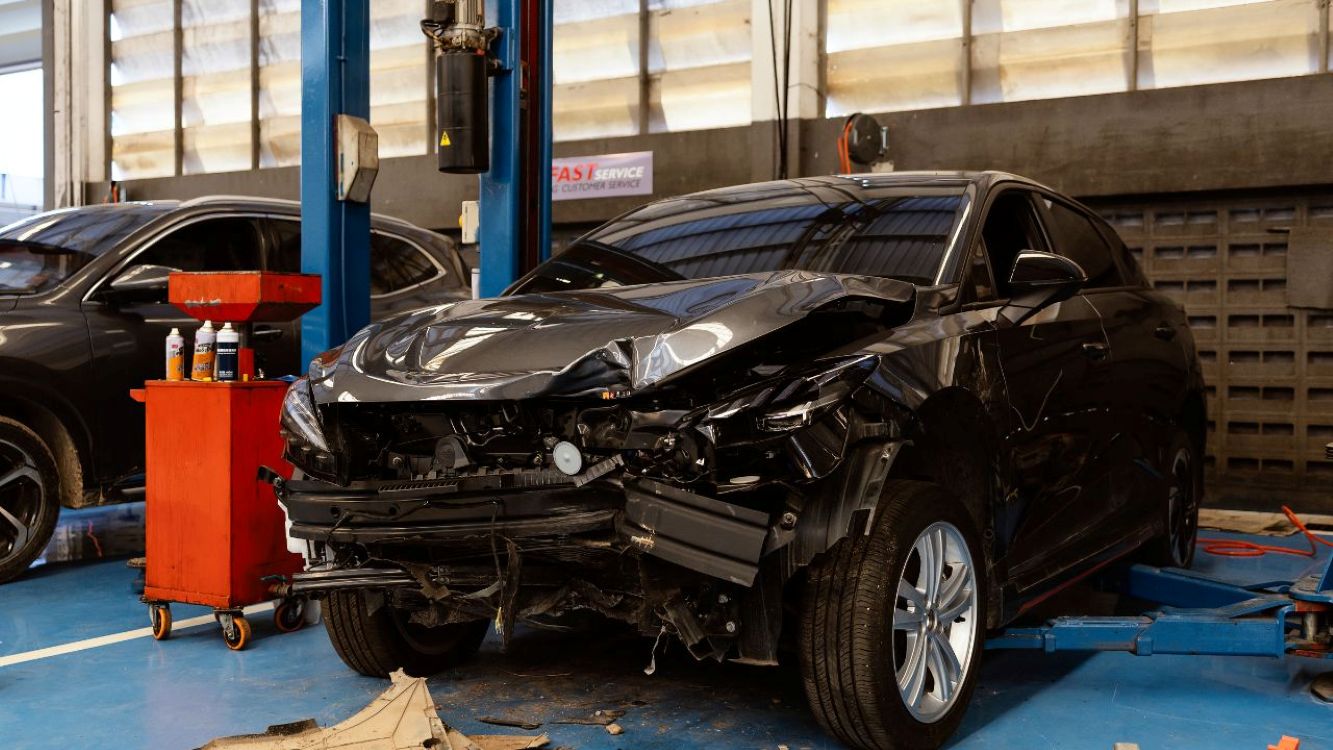
A dent caused by a collision may be more complicated than a simple parking-lot ding.
An impact can affect more than the visible dent.
There may be damage involving:
- Adjacent panels
- Bumpers
- Mounting points
- Lights
- Sensors
- Structural components
If your dent resulted from an accident, you may need collision repair in Philadelphia rather than a standalone dent repair.
A professional inspection can help determine whether the dent is isolated or part of a larger repair.
Why You Shouldn’t Choose a Repair Based Only on Price
When searching for the lowest dent repair cost, it’s tempting to choose the cheapest quote.
But a lower price isn’t necessarily better if the repair doesn’t properly address the damage.
Instead, ask:
- Which repair method is recommended?
- Why is that method appropriate?
- Is the paint damaged?
- Is there hidden damage?
- Will the panel be repaired or replaced?
- Is refinishing included?
- What warranty applies?
Understanding the repair is more useful than simply comparing two numbers.
How to Get an Accurate Dent Repair Estimate
A professional inspection is the best way to get a realistic estimate.
Before visiting a repair shop, take clear photographs of the dent from different angles.
If possible, also note:
- When the damage occurred
- How it happened
- Whether the paint was damaged
- Whether there are multiple dents
- Whether nearby panels are damaged
When you visit the shop, ask the technician to explain whether PDR or traditional repair is recommended and why.
Choosing a Philadelphia Auto Body Shop
When looking for an auto body shop in Philadelphia, don’t focus only on price.
Consider the shop’s:
- Experience
- Reputation
- Communication
- Repair process
- Ability to explain estimates
- Approach to paint and refinishing
- Warranty information
For dents, scratches, damaged panels, and other exterior problems, professional auto body repair in Philadelphia can help determine the appropriate repair method.
Does Insurance Cover Dent Repair?
Insurance coverage depends on how the damage occurred and what your policy covers.
For example, dents resulting from an accident, hail, or another covered event may be handled differently depending on the circumstances.
If you’re considering an insurance claim, contact your insurer to confirm coverage, deductible, and claim requirements.
Keep photographs and repair estimates for your records.
Conclusion
The dent repair cost for your vehicle depends on much more than the size of the dent. Paint condition, location, depth, panel material, accessibility, and whether the damage is part of a larger collision all influence the repair.
Paintless dent repair can be an excellent option for certain dents because it may preserve the existing finish without repainting. Traditional repair remains important for damage involving cracked paint, severe deformation, or other conditions that PDR cannot appropriately address.
Nigro’s Auto Body can help Philadelphia drivers understand their vehicle damage and determine which repair approach may be appropriate.
If your vehicle has a dent from a parking-lot impact, hail, accident, or another incident, contact Nigro’s Auto Body to have the damage evaluated and discuss the best repair option for your vehicle.
FAQ’S
Dent repair cost varies based on the dent’s size, depth, location, paint condition, vehicle material, accessibility, and repair method. A professional inspection is needed to determine the actual cost.
It can be, particularly for suitable small dents because PDR may avoid painting and some of the preparation involved in traditional bodywork. However, cost depends on the specific damage.
No. PDR is generally most suitable for certain dents where the paint remains intact and the panel can be accessed appropriately. Severe deformation or damaged paint may require traditional repair.
PDR is designed to preserve the existing finish rather than repaint the panel. When performed appropriately, it can restore the shape while maintaining the existing paint.
Yes, but traditional body repair and refinishing may be more appropriate because PDR alone does not restore missing or damaged paint.
It can be suitable for certain hail dents when the paint remains intact. The number, size, location, and severity of the dents determine whether PDR is appropriate.
It’s a good idea to have the damage inspected, even if the dent looks minor. An impact can sometimes cause damage beyond the visible exterior.
Repair time varies. Some suitable PDR repairs can be completed relatively quickly, while traditional repairs involving bodywork and refinishing may require additional time.
Comparing estimates can be helpful, but make sure you’re comparing the same repair method and scope. Ask why each shop recommends its particular approach.