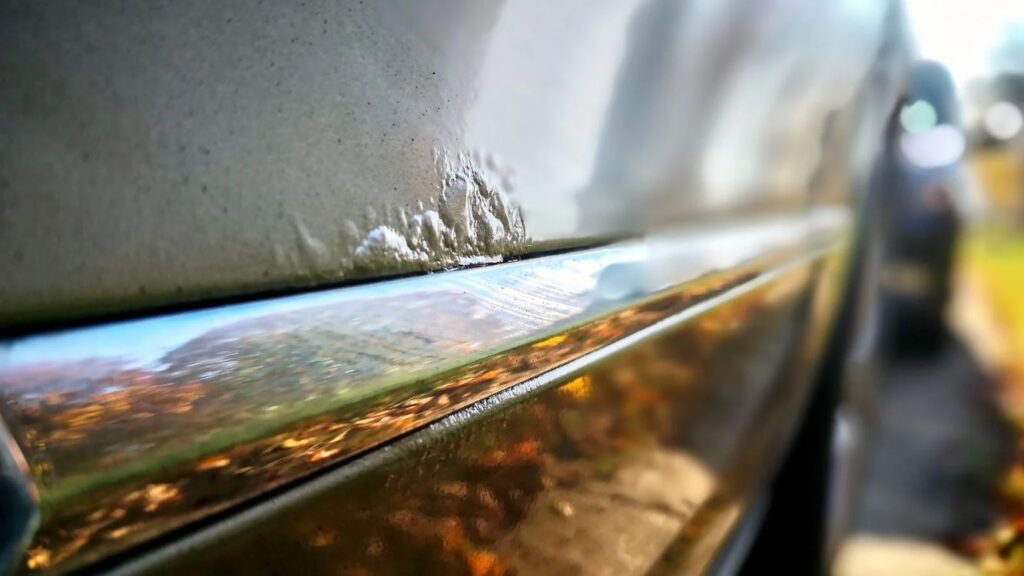
Every winter, crews spread salt and brine on Philadelphia roads so we can drive safely. It works, but your car pays for it. Salt turns ordinary winter moisture into a rust-making machine, and the damage often starts where you can’t see it.
This guide shows you where rust starts, what to check on your own car in five minutes, how to protect the body through winter, and when it’s time to bring it to a shop.
Quick answer
- Road salt doesn’t create rust on its own. It makes rust form much faster wherever paint is chipped, scratched, or cracked.
- The most common trouble spots are rocker panels, wheel arches, door bottoms, and lower bumper corners.
- Rinsing off salt every week or two, and fixing chips early, is the best defense.
- Rust you catch early is a small repair. Rust that eats through the metal is not.
How Road Salt Causes Rust
Steel rusts when it touches oxygen and water. Your paint is the shield that keeps them away from the metal. Salt doesn’t remove that shield, but it speeds up rusting dramatically as soon as the shield has a gap.
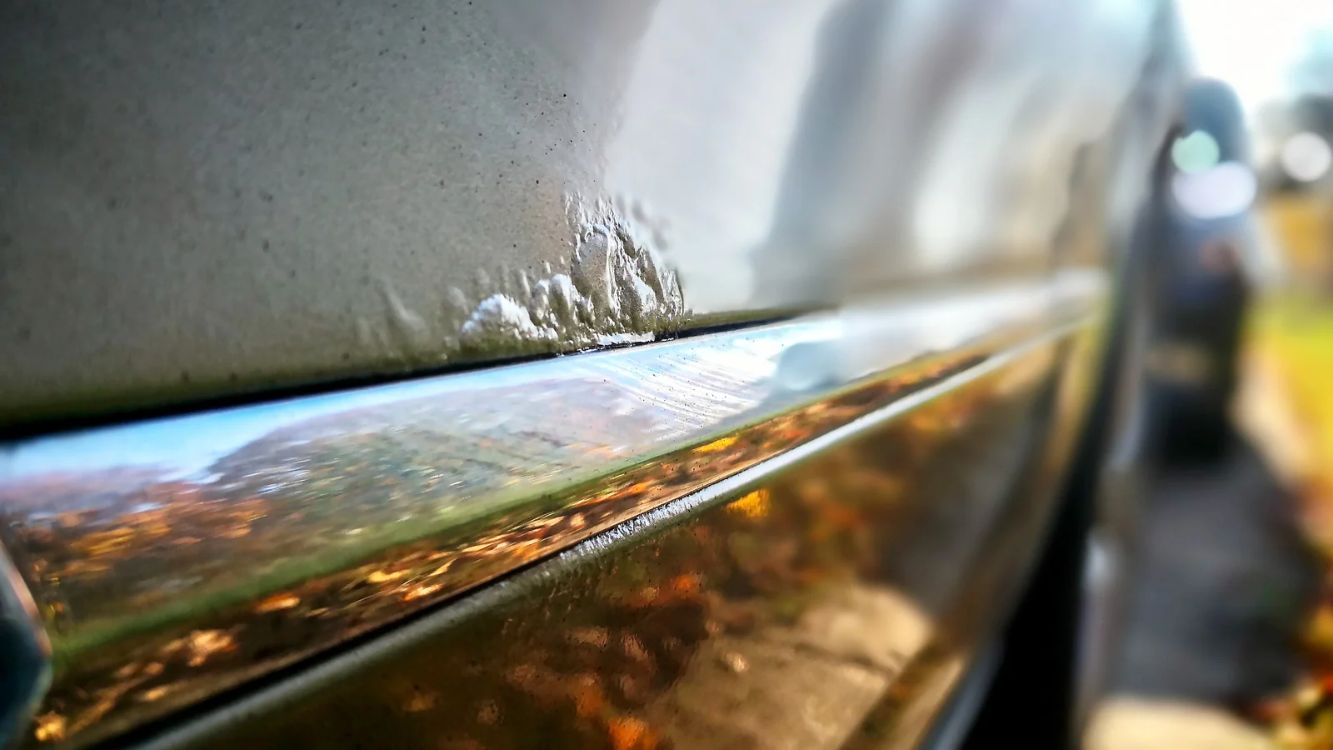
A rock chip, a scratch, a small dent, or a poorly sealed old repair is all it takes. Salty slush creeps under the edge of the paint, and the rust spreads underneath where you can’t see it. By the time you notice a bubble, the damage is already bigger than it looks. Our guide to car rust repair and why small dents turn into big problems goes deeper on how this happens.
Where Rust Starts First
Salt spray and trapped moisture collect in the same places year after year. These are the spots to watch:
- Rocker panels: the metal strips under your doors that take constant road spray.
- Wheel arches and fender edges: where stone chips and spray meet.
- Bottom edges of doors, the trunk lid, and the tailgate: water collects here and drains slowly.
- Lower bumper corners: moisture hides behind plastic trim. A cracked or loose bumper cover makes it worse, so see our bumper repair service if yours is damaged.
- Old dents: a dent often has cracked paint you can’t see. Learn how we handle car dent repair.
- Scratches that reach bare metal: see our scratch repair page for what a proper fix involves.
Your 5-Minute Rust Check
Do this on a dry day, ideally before the first big salt event and again in early spring. You only need your eyes and a flashlight.
- Walk around the car slowly. Look for orange or brown specks, paint bubbles, or dull patches.
- Crouch down by each wheel. Check the wheel arch lip and the rocker panel below the door.
- Open each door and the trunk. Look along the bottom edges and seams.
- Check every chip and scratch you already know about. If bare metal is showing, it needs attention.
- Take photos. A quick picture of anything suspicious helps you notice if it is getting worse.
8 Ways to Protect Your Car’s Body This Winter
- Fix paint damage before the salt arrives. A small chip is a quick fix. Left alone through a salty season, it can turn into a rust patch. Our paint touch-up guide explains your options.
- Wash every week or two. Rinse your car regularly when roads are being salted, and after any storm where streets were treated.
- Rinse the underside. The undercarriage, wheel wells, and lower panels collect the most salt. Use a car wash with an undercarriage spray.
- Wash even when it’s cold. Pick a day above freezing if you can, and dry the door seals and edges so they don’t freeze shut.
- Wax or seal the paint in the fall. A protective layer helps salt and moisture slide off instead of sitting on the paint.
- Keep drain holes clear. Doors and rocker panels have small drain openings. If they clog with leaves or dirt, water stays inside the panel.
- Rinse before you park in a garage. A wet, salty car in a warm garage can rust faster, because the salt stays active in the moisture.
- Inspect again in early spring. Once the salting stops, check the spots above so small problems don’t grow over the summer.
How Serious Is Your Rust?
Not all rust is the same. Use this table to see where yours falls and what to do about it.
| Stage | What you’ll see | Typical repair | How soon |
|---|---|---|---|
| 1. Surface rust or chip | Small orange specks, or a chip showing bare metal | Sand to clean metal, treat, prime, color match, and repaint the spot | Before the next salt event |
| 2. Bubbling paint | Paint blisters or raised bumps | Remove the bubbled paint, grind rust out to bare metal, refinish the panel | Within a few weeks |
| 3. Rust-through | Holes, flaking or crumbling metal | Cut out the damaged metal and weld in new, or replace the panel | Get it checked right away |
If you’re unsure whether a section can be repaired or needs replacing, our article on repairing vs. replacing body panels explains how that decision gets made.
Why You Shouldn’t Just Paint Over Rust
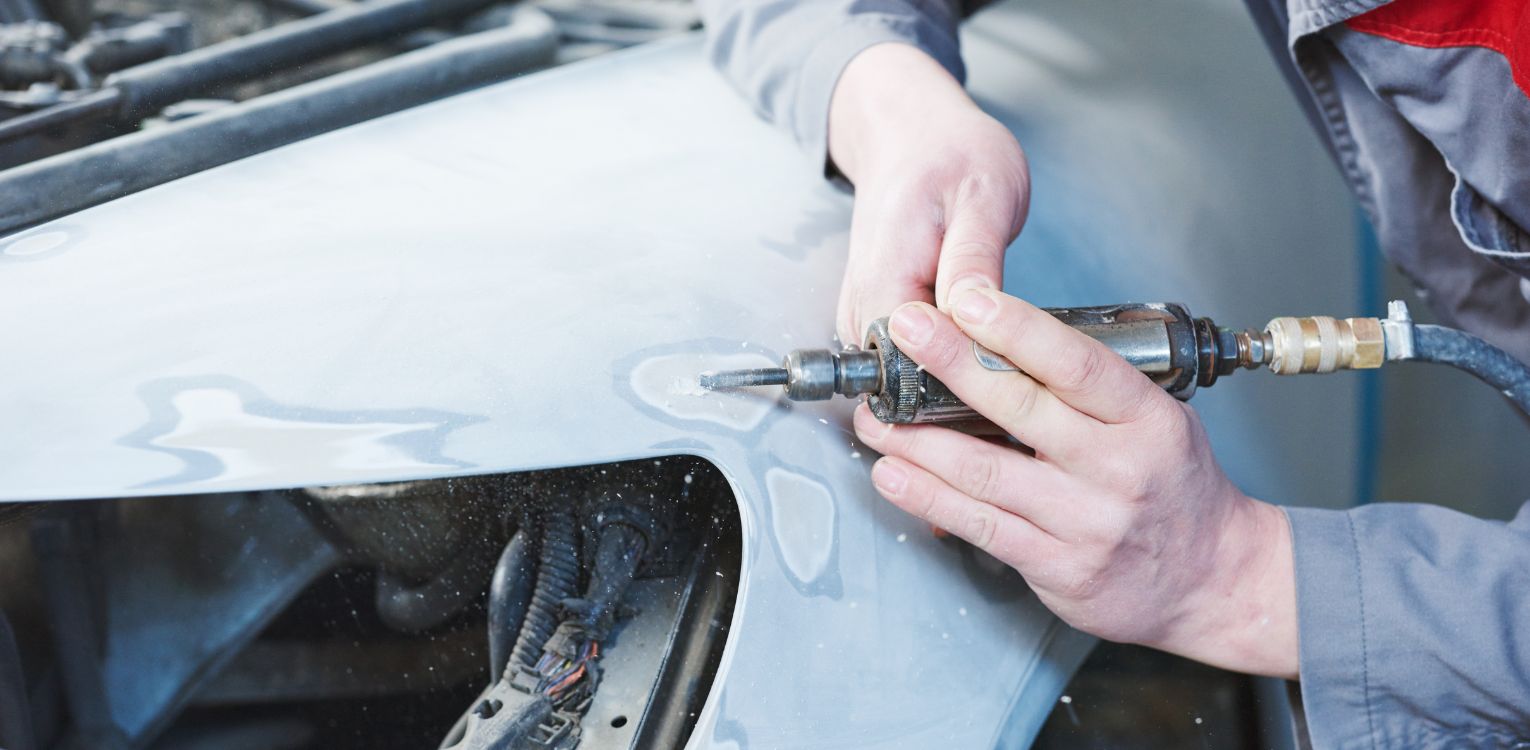
It’s tempting to sand a spot, spray some paint, and call it done. Unfortunately, paint over rust only hides it for a while. The rust keeps spreading underneath, and the patch usually fails within a season or two, often bigger than before. A proper repair removes all the rust, seals the bare metal, and then refinishes it so the color blends in. If you are thinking about doing it yourself, read DIY car painting mistakes to skip first. For a professional finish, see our automotive refinishing service.
When to Have a Body Shop Take a Look
Bring your car in if you see paint bubbles, orange-brown stains, flaking edges, or a chip that has started to spread. A quick look from a trained eye can tell you whether it’s a simple touch-up or something deeper, and early repairs almost always cost less than waiting.
Get your car checked at Nigro’s Auto Body
Our team has been repairing Philadelphia cars since 1983. Our collision repair team can look at the problem area, explain what you’re dealing with in plain terms, and give you an estimate before any work begins. Not sure what to expect? Read what happens during a free collision repair estimate.
Call: 215-925-4520
Visit: 939 Washington Ave, Philadelphia, PA
Hours: Monday to Friday, 8:30 to 5
Contact us online
Frequently Asked Questions
Does road salt damage the paint or only the underside?
Both. Salt spray reaches the lower body panels and paint as well as the underside. Any chip or scratch gives it a way into the metal.
Is it okay to wash my car in winter?
Yes, and it is one of the best things you can do. Removing salt matters more than keeping the car looking clean. Dry the door edges and seals afterward so they don’t freeze.
Can small rust spots be fixed without replacing a panel?
Yes, if the rust has not gone through the metal. Surface rust and early bubbling can usually be removed, treated, and refinished. Rust that has eaten through usually needs a section repair or a replacement panel.
How often should I wash my car when roads are salted?
A rinse every week or two is a good rule, plus one after any storm where the roads were treated. Make sure the wash includes the underside and wheel wells.
When is the best time to repair rust?
As soon as you notice it. Rust spreads under the paint, so the longer it sits, the bigger the repair becomes.