If you live in or around Philadelphia, you know the feeling: you round a dark curve on a fall evening, and a deer is suddenly in your headlights. Even at moderate speed, a collision with a deer can leave a lot of visible damage, and some of it is easy to miss.
Pennsylvania deer season runs through the fall, and November is one of the busiest months for deer on the road. This guide walks through the body damage we typically see, what to do right after a strike, and what a collision repair services visit looks like once you bring your car in.
Quick answer
- Deer strikes most often damage the hood, fender, bumper, headlight, and grille, because those panels take the first hit.
- The radiator support and the structure behind the bumper can be pushed out of position even when the outside looks only mildly dented.
- After a strike, stay safe, photograph everything, and have the car looked over before assuming it is just cosmetic.
- A proper repair includes a teardown, a structural measurement check, and a color-matched refinish.
Where Deer Collisions Usually Cause Damage
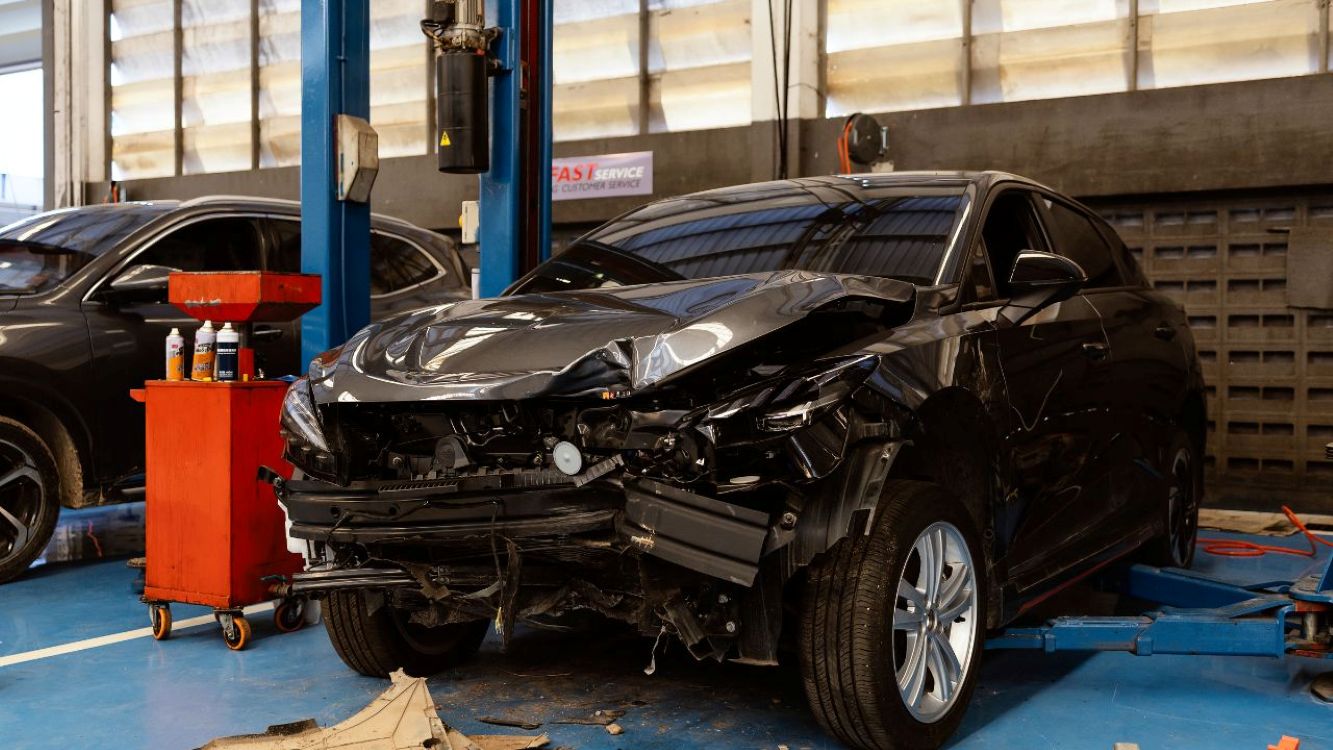
Because deer stand tall and heavy at the front of a car, the impact usually lands high on the front end. Here is what we commonly see:
| Area | What it can look like | What a repair may involve |
|---|---|---|
| Hood | Creases, buckled corners, or a hood that no longer closes flush | Straightening or replacing the hood, then refinishing |
| Fender | Crumpled metal or plastic, torn edges, uneven gaps near the door | Repair or replacement, plus careful alignment |
| Bumper cover | Cracks, scrapes, popped-out corners, missing clips | Repair or replacement and refinishing |
| Headlight and grille | Cracked housings, broken tabs, shattered grille slats | Replacing broken parts and re-fitting mounts |
| Radiator support | Pushed-back or bent mounting panel behind the bumper | Measuring and pulling it back to spec, or replacing it |
| Windshield and roof edge | Chips or cracks when the deer is thrown upward | Glass inspection and replacement if needed |
Many of these parts depend on each other. A bent fender can pull on the hood hinge, and a pushed-in bumper can hide a shifted support. That is why a quick glance rarely tells the whole story. For more on the repair-versus-replace decision, see our guide to repairing versus replacing body panels.
What to Do Right After a Deer Strike
The first few minutes matter for your safety and for the repair that follows.
- Pull over safely and turn on your hazard lights.
- Stay away from the animal. An injured deer can kick or lunge, so keep your distance and call local authorities if it is blocking the road.
- Take photos of the damage, the scene, and the road before anything is moved.
- Look at the car from a safe distance. If a hood is sprung open, glass is broken, or parts are hanging low, do not keep driving.
- Arrange to get the car to a shop rather than pushing on if anything looks loose or unsafe.
If you are unsure whether it is safe to drive, it is better to wait. A hanging bumper or a loose panel can come off at speed.
Why Deer Damage Is Often Bigger Than It Looks
A deer weighs a lot, and the force is concentrated on a small area. The plastic bumper cover can flex and spring back, hiding the damage underneath. Behind it sit the reinforcement bar, absorbers, brackets, and the radiator support.
If those parts are pushed even a little out of line, you may notice uneven panel gaps, a hood that will not latch cleanly, or headlights that sit at different angles. These are signs worth taking seriously. Our article on bumper repair versus replacement explains how we judge what is salvageable.
When the hit is hard enough, the force can travel into the structure. In those cases, frame straightening signs to watch for include doors that rub, uneven gaps, and a car that sits slightly crooked.
What the Repair Process Looks Like
Every car is different, but a thorough deer collision repair generally follows these steps:
- Estimate and teardown. We look at the visible damage, then remove the bumper cover and other parts to see what is hiding behind them.
- Structural measuring. Computerized 3D measuring shows whether the support or frame has moved, and computerized frame straightening pulls it back to factory dimensions when needed.
- Panel work. Hoods and fenders are repaired or replaced. Our overview of OEM versus aftermarket parts covers the choices you may have on replacement parts.
- Refinishing. Computerized color matching and BASF R-M Onyx HD paint, applied in a downdraft booth, help new panels blend with the rest of the car. Learn more about automotive refinishing.
- Final checks. We confirm gaps, alignment, lights, and finish before you pick the car up.
Smaller dings and creases on a panel that is otherwise sound may be handled with dent repair, and cracked or scuffed covers may fit bumper repair. Our technicians will tell you which applies once the damage is fully exposed.
Tips for Fall Driving in Philadelphia
- Slow down at dawn and dusk, when deer are most active.
- Watch for more than one animal. Where there is one deer, others often follow.
- Use high beams on dark roads when no one is ahead of you.
- Brake firmly and stay in your lane. Swerving into another lane or a tree can make things much worse.
- Buckle up every time.
If you are shopping around for a repair facility, our checklist on how to choose a collision repair shop in Philadelphia is a good place to start. And if you want to know why training matters, read about I-CAR certified collision repair.
When to Have a Body Shop Take a Look
Have the car checked any time a deer strike leaves you with a dented hood, cracked bumper, loose trim, shifted headlight, or panels that no longer line up. Early inspection helps prevent small misalignments from turning into bigger fitting problems.
Talk to Nigro’s Auto Body
See our full range of collision repair services, or read what to expect from a free collision repair estimate.
Call us: 215-925-4520
939 Washington Ave, Philadelphia, PA
Hours: Monday to Friday, 8:30 to 5
Frequently Asked Questions
Can I keep driving after hitting a deer?
Only if the car looks safe: no loose panels, no broken glass in your view, and nothing hanging low. If you are unsure, do not drive it. A loose bumper or hood can become a hazard quickly.
Will the damage get worse if I wait?
Cracked plastic, bent brackets, and loose panels can shift over time. A prompt inspection gives you a clear picture of what is damaged.
Can a hood or fender be repaired, or does it need replacing?
It depends on how far the metal is stretched and whether the shape can be restored. Light creases often repair well. Sharp folds and torn edges usually call for replacement.
How do you make sure the paint matches?
We use computerized color matching and quality paint, then blend where needed so the repaired area looks consistent in daylight.
Does your work come with a warranty?
Yes. Our paint and repair work is covered by a lifetime warranty for as long as you own your vehicle.